Native American’s Earth
Although plenty of world's fairs had displayed aspects of Native life over the years (often in a very derogatory way), this was the first time that space at a world's fair had been set aside for Native folks to tell their own story in the present tense. According to the Official Souvenir Program:
You're in Indian Country!
While you tour Expo '74 and the Folklife festival you see one-fourth of the $1.1 million budget allocated for native Americans participation in Expo. Indians of America, especially those of the Northwest, are displaying their art and culture during the Fair. A total of 128 tribes, bands, and Indian affiliated organizations laid plans for the program.

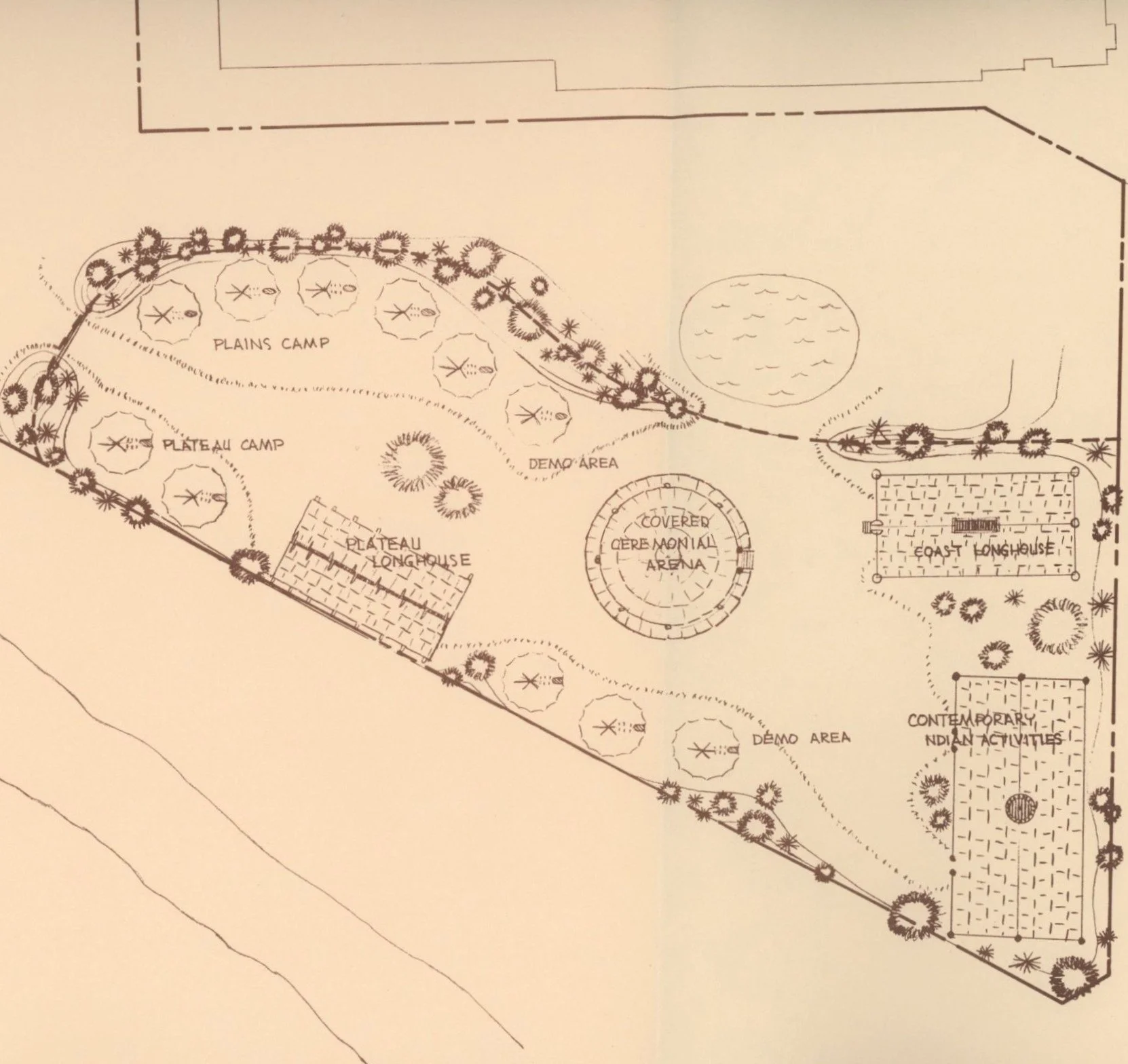
Map of planned Native American’s Earth layout, from booklet.
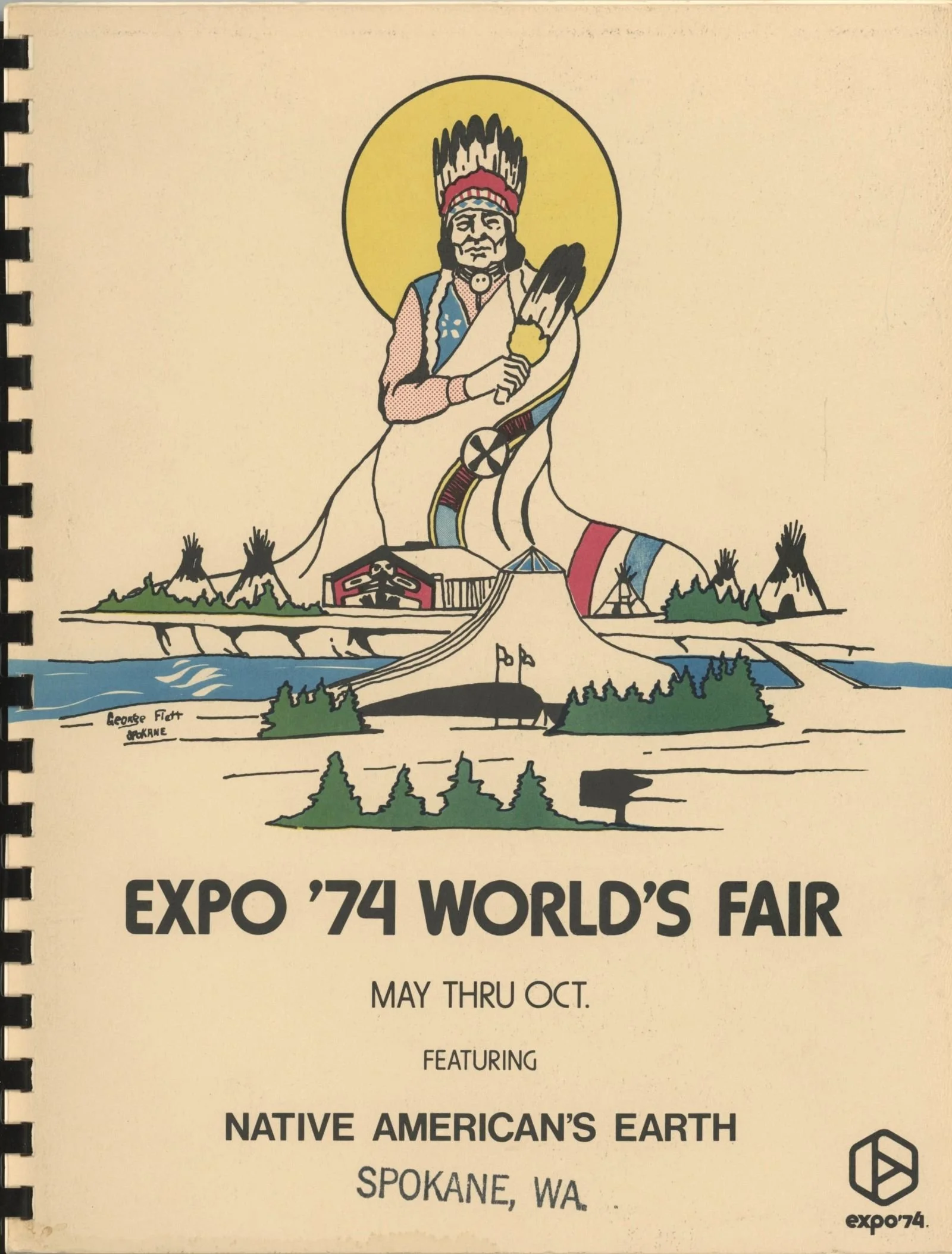
The official program and guide somewhat underplay the scope and diversity of programs available in this section of the fair. MONAC receives more mentions in official materials. However, in reality this was one of the most popular sections of the fair, and had new performers, artisans, and activities every week.


Umatillas and Piegans were the feature of the week for June 8 - June 14, showing off their drumming, dancing, and songs. NAE's director, Sonny Tuttle, was quoted this week as saying, "We were told last week by (Expo general manager) Petr Spurney that the Indian pavilion is running second in interest to the Russian pavilion. We have had people from all over the world visit our area taking pictures and talking to people."
From June 15 - June 21, there were special appearances by representatives from the Colville, Makah, and Arapaho nations. Both the Makah and Colville groups brought delegations that were mainly composed of children and young people from their school programs. The young people demonstrated traditional skills like dance, basket weaving, carving, language, and music.
Week of June 22 - 28. Native American’s Earth this week featured the Spokanes and the Kahclamet Dancers, a Yakima group.(2) Members of the Spokane Tribe demonstrated corn husk weaving, beading, hide tanning, and dancing. They also built a smokehouse.
On the evening of Thursday, June 27, two representatives from the Spokane Tribe of Indians enacted a traditional Spokane wedding. Carol Sterns played the bride and Mike Sayler played the groom. Carol talked about the message of that wedding enactment in the KSPS documentary about Expo, “Meet Me By The River: Expo/50.”
If we're cut, we bleed just like you. We, too, fall in love and want to join with another person and have a family, and this is how we do it.
You can see her interview and more in the documentary, embedded on this page. I have cued it up to the relevant part at 35:59.